
Without a scratch, yet helpless in the Alps
by Renate Buchner
Every step makes your leg muscles burn; you look up—the summit cross now within reach—and you keep telling yourself: “Just a few more steps, just a few more meters.” Your strength is visibly waning, and an inner voice urges you to keep going.
The Alps are mysterious, like a relaxing oasis, and if you let it, it can reveal your own limits. The magnificence of the view and the surrounding peacefulness entice you to stay. It's time to descend. The sun sets low, transforming the mountain peaks into dark outlines. Twilight starts to fall.
Your breath quickens. Your sight wanders, looking for a path. A misstep causes you to stumble. The night appears much darker. You cautiously put one foot in front of the other. "Is this the right way?" You can hear crackling and crashing in the distance. Your heart races, your muscles tighten, and your mouth feels bone-dry. You wipe the sweat from your brow. The wind slashes savagely through your clothes, causing an unpleasant feeling. Exhausted, you sit down and pull your feet in close. You take some deep breaths. Your fingertips are numb from the cold. It takes several attempts to unlock the display. Your fingers tremble as you dial an emergency number. It rings. On the other end, the dispatch center responds.
...become an everyday occurrence for mountain rescue teams
What sounds like the script for a dramatic mountain thriller has long since become an everyday occurrence for mountain rescue teams. In professional circles, such situations are referred to as a "blocking trend"—a term for instances where mountaineers, while physically uninjured, have become so lost or so overwhelmed by the terrain that they are unable to continue their journey. An incident in the municipality of Eisenerz, in the Austrian state of Styria, clearly highlighted this trend.
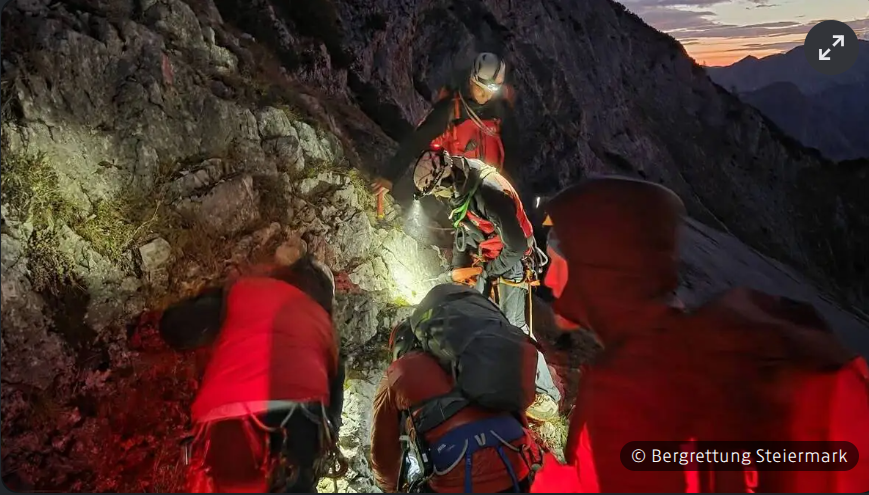
Six people—including four children, the youngest of whom was six years old—found themselves in distress in the Rotriegel area at an altitude of over 1,860 meters. The children were so exhausted from navigating the difficult trail—which was strewn with loose rock and featured steep, rocky steps—that they were unable to take another step. As twilight set in, temperatures dropped rapidly, exacerbated by gusty winds. Unsure of how to manage the descent, the parents placed an emergency call late in the evening. This triggered a major rescue operation involving 30 personnel from the Eisenerz Mountain Rescue service and the Alpine Police.
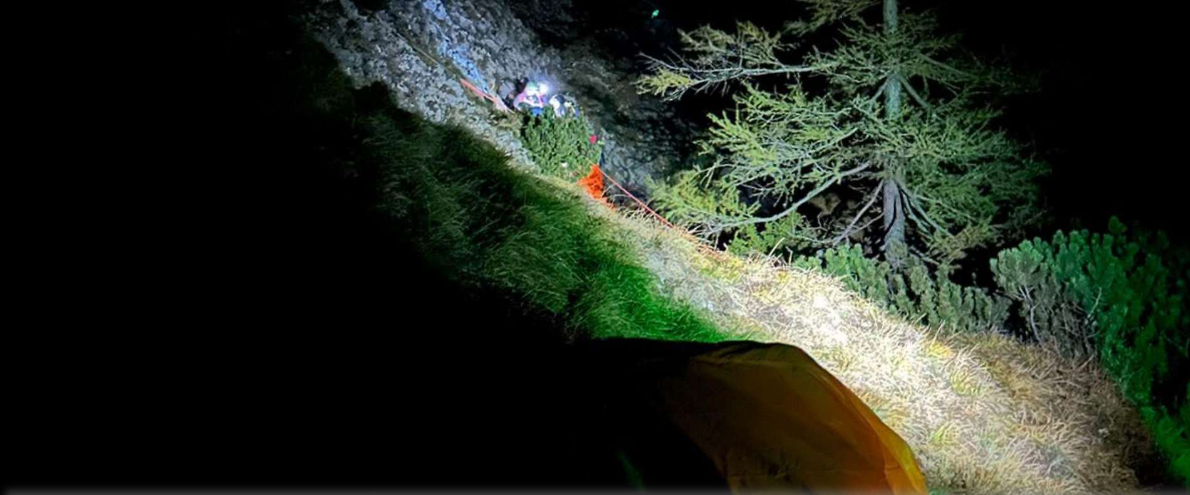
"We already attempted to bring the individuals down from the mountain during the night. Unfortunately, this was not possible due to the weather conditions and strong winds," explained René Dengg of the Alpine Police. He added that mountain rescuers spent the night with the family and set up emergency shelters—known as bivouacs—to protect them from hypothermia.
In October 2026, the province of Styria recorded three such rescue operations within a single week. Statistics regarding the rescue of uninjured individuals are fueling the debate—specifically concerning how information about route planning, difficulty levels, necessary equipment, and appropriate conduct in challenging situations can be more effectively communicated to tourists. Text-based warnings and recommendations are perceived as too vague; people often struggle to form a concrete idea of what these terms actually entail in a real-world scenario.
In 2025, mountain rescue services in Austria recovered 11,104 individuals, 2,233 of whom were uninjured; by comparison, a total of 10,406 individuals were recovered in 2024, 2,403 of whom were uninjured.
The mountains have changed...
At a press conference held during the Internationale Bergtage in September, Gerald Dunkel-Schwarzenberger, President of the Association of Alpine Clubs of Austria, described the issue as follows: “The mountains have changed, and the preparation of many mountaineers is failing to keep pace. When approach routes lead across bare ice and snow bridges no longer hold, yesterday’s experience is no longer sufficient.” He emphasized that route descriptions and trail information should reflect current conditions, adding that it is essential to “reach people where they plan their trips—while also ensuring a long-term, secure alpine infrastructure.”
This reflects the challenge addressed by the OTS campaign, “Safe on the Mountain: Österreichs Wanderdörfer Raise Awareness for Alpine Safety.” The campaign aims to encourage member regions to provide hikers with information in a clear, well-organized format.
Simple, straightforward information—available in both physical forms (maps, information boards, brochures) and digital formats (apps, websites, QR codes)—as well as GPS navigation, helps ensure the alpine safety of hikers.
Taking a quick glance at their phones before setting off—many hikers naively rely on Google Maps. According to *Chip* magazine, this is a dangerous mistake: because the app displays neither contour lines nor the steepness of the terrain, hikers and mountaineers can find themselves in perilous alpine situations—the app may suggest impassable paths, sheer rock faces, or via ferratas as if they were standard hiking trails.
Dedicated hiking apps such as Komoot, Bergfex, or Alpenvereinaktiv provide topographical details, trail markers, and warnings about potential hazards.
0 Comments Add a Comment?